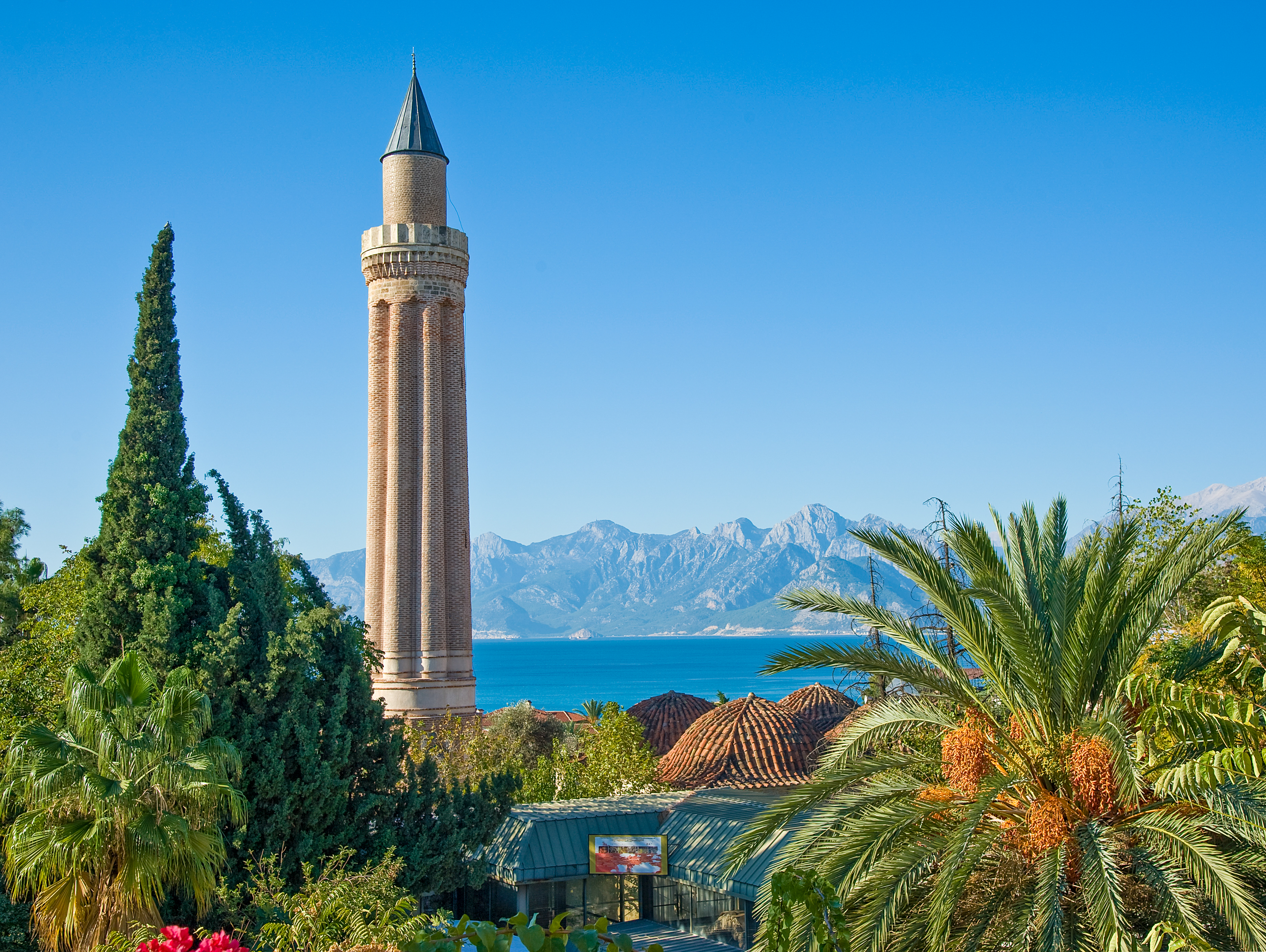
Yivli Minaret
Rising majestically in the heart of Antalya, the Yivli Minaret is one of the city's most iconic and historic landmarks. A captivating example of Seljuk architecture, this minaret is immediately recognisable by its striking brickwork and fluted shaft, standing as a testament to Antalya's rich past. Constructed in the 13th century, it was once part of a larger complex and today stands proudly alongside the Yivli Minare Mosque, which remains an active place of worship. The Yivli Minaret and its surroundings are an architectural marvel you'll encounter as you wander through the narrow streets of Kaleiçi. The adjoining Yivli Minare Mosque draws visitors in with its architectural simplicity and serene atmosphere. You can find peace in the mosque courtyard, soak in the historical ambiance, and momentarily escape the city's hustle and bustle. It's a special stop for both worshippers and those interested in our historical and cultural heritage. ## Explore the Yivli Minaret and its Surroundings Situated at the epicentre of Kaleiçi, the Yivli Minaret serves as a natural starting point for your exploration of the old town. From the base of the minaret, you can lose yourself in the labyrinthine streets, discovering historical houses, boutique hotels, and artisan shops. The intimate atmosphere of the area and the historical details around every corner will transport you back in time. It's also just a short walk from other significant Antalya landmarks such as Hadrian's Gate, Karaalioğlu Park, and the old harbour. After a day of thorough exploration, you can enjoy a traditional Turkish tea or meal in one of the many cafes or restaurants nearby. The Yivli Minaret is not just a historical monument; it's the beating heart of a vibrant, living Kaleiçi. It's an absolute must-see for anyone wishing to experience the blend of historical texture, cultural richness, and warm hospitality that Antalya offers. Should you wish to delve deeper into this region, a guided tour such as the [Antalya City Tour](/en/tours/antalya-city-tour) can unveil the city's hidden gems. Additionally, for an authentic Turkish experience, consider indulging in a [Traditional Turkish Hammam](/en/tours/traditional-turkish-hammam). Discover all the beauty Kaleiçi has to offer by visiting our [Kaleiçi region page](/en/regions/kaleici). The Yivli Minaret is just one of the many starting points awaiting you on your Antalya adventure.
History
The Yivli Minaret was constructed in the early 13th century during the reign of the Anatolian Seljuk Sultan Alaeddin Keykubad I. It was built as part of an effort to transform Antalya into a Turkish-Islamic city after its conquest. It is thought to have originally been part of a larger architectural complex, built upon the foundations of a Roman temple. While the minaret showcases the Seljuks' mastery in brick and tile work, the adjacent mosque was later rebuilt in 1373 by the architect Balaban, after the original Seljuk mosque was destroyed in a fire. Throughout the centuries, the Yivli Minaret has served both as a place of worship and a landmark for sailors arriving in Antalya. Today, it remains a significant symbol reflecting the city's vibrant history.Visiting information
The Yivli Minaret and the Yivli Minare Mosque are generally open to visitors throughout the day. The mosque is accessible outside of prayer times, but it is important to show respect to worshippers. * **Admission Fee:** There is no charge to visit the minaret (from the outside) or the mosque and its courtyard (approx. 0 EUR). * **Opening Hours:** The mosque is open for prayer throughout the day. For tourist visits, 09:00 AM to 06:00 PM is ideal. * **Best Time to Visit:** Early mornings or late afternoons are recommended for a quieter experience. The spring and autumn months (April-May, September-October) offer the most pleasant weather. * **How to Get There:** It is located in the heart of Kaleiçi. Easily reachable on foot from Antalya city centre. You can take a bus or tram to the Kalekapısı stop and then it's a short walk. Taxis are readily available. * **What to Bring:** For mosque entry, women should carry a headscarf, and all visitors should wear clothing that covers shoulders and knees. Shoes must be removed at the entrance. * **Accessibility:** As a historical structure, wheelchair access may be limited. The courtyard is flat, but the mosque entrance has steps.Related tours
 Free cancellation
Traditional Turkish Hammam Experience
Authentic 2-hour hammam ritual: sauna, scrub, foam massage & oil massage.
 Free cancellation
Antalya City Tour — Kaleiçi, Waterfalls & Cable Car
Old town, Düden waterfalls and Tünektepe cable car half-day tour.